Monday, August 8, 2011

I’m restless and I can’t figure out why.

I used my pocket-knife to clean out my toenails, turn my impossibly ripped jeans into impossibly tacky jorts, and sharpen this pencil. I can't think of anything else productive for me to do so I guess I’ll write. I arrived in Salta today and something about the bustle of the bigger city after the tiny villages further north seems to have gotten to me. I feel jittery. I’ve read and reread the Hemingway novel I brought and finally bought a new book today. It was expensive. Books in English here are nearly double what they should be. Thankfully though, everything else is cheap.

But all in all, life is pretty good right now. I have been eating and living well. Two nights ago my friend and I cooked an asado for some French girls we were traveling with. I don’t think they realized we had no idea what we were doing. It took us a long time to get a decent fire going with the sticks and kindling we found lying around and we were lucky the coals caught. While it cooked they laughed to themselves and it took me a long time to realize I had black soot all over my face. Still, all things considered, the asado turned out well.

My friend liked the girls more than I did. We left them this morning and I was happy to get away. They spoke no Spanish, less English, and walked very, very slowly. The other night we were at dinner with them and a French guy named Jeremy. Jeremy spoke perfect English but no Spanish. The girls were asking the waitress what an item on the menu was and hand motions were only getting them so far. The waitress asked me for my help. I translated what the waitress said to me into English for Jeremy and Jeremy translated what I said to French for the girls. After all that, it turned out they wanted something else.

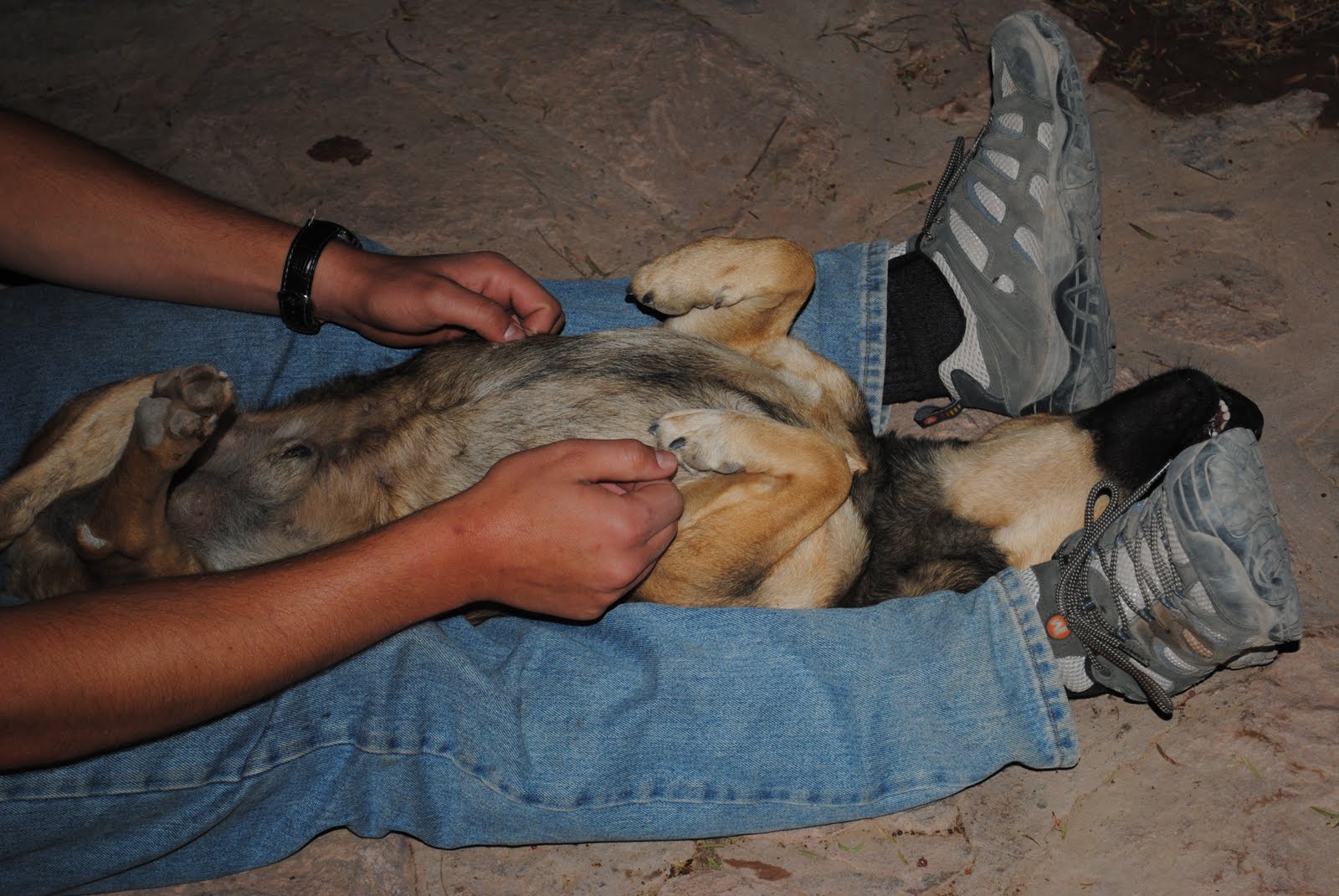
Thankfully though, what the girls lacked in companionship we made up for with dogs. In all these tiny mountain towns stray dogs are everywhere. We found Alfred in Tilcara; he was squat, ugly, and ran with a pronounced limp in his back left leg. When his tongue lolled out the side of his mouth it looked like he was smiling. He followed us home one night and we gave him some food. In the morning he was still there, and still smiling. Everywhere we went after that, Alfred followed. When it came time to leave town, he curled up underneath our bench at the bus station and licked at our feet. The bus arrived and we asked the driver if we could take our dog. He said no, it was illegal. We asked if we could bribe him. He said normally yes, but there was a cop ten feet behind us. We watched Alfred limp-hop after the bus as we pulled away: it felt like a scene from Where the Red Fern Grows.

In the next town we found Buddy—a bigger, prettier, and altogether worse dog. He had a habit of picking up dried horse shit and dropping it at our feet to play fetch. He chased cars and bit at their wheels. When they stopped, he pissed on their fenders.

Alfred, if you are reading this, know that you are irreplaceable.

That night, after we managed to ditch Buddy, we returned to our hostel. It cost seven dollars a night. There was a group of middle aged Argentines grilling outside our room and they invited us over. They gave us a lot of good food and were very sweet. The moms kept showing us pictures of their daughters. They drank good wine and kept our cups full without us every having to ask.

Only in Argentina they said, only in Argentina do people invite strangers over for dinner. We are a very warm people.

Yes, I said. Yes, you are. They pounded me on the back and filled my glass again. Everybody’s face seemed happy and kind by the firelight. It was a lovely evening.

Later we went to a peña with those that were still awake. A peña is a sort of restaurant that plays traditional folk music. Dani, who rode a motorcycle and was my favorite of the group, was clearly a peña expert. Within five minutes of our arrival he had the whole restaurant up and dancing. Danny grabbed hands and danced with an absolutely blind-drunk indigenous woman named Rosita while I danced with his wife. At some point, Rosita decided she could do a better job than the drummer and took his sticks and started to play. She was surprisingly good.

When we woke in the morning, Buddy was waiting outside.


Saturday, August 6, 2011

It is Thursday morning.

I am in a small hostel in a small town surrounded by massive and indifferent mountains. The phone lines here have been out for almost two weeks. On Monday night I took a day-long bus ride from Buenos Aires to San Salvador, the capital of Jujuy. It shares a border with Bolivia and is the northernmost province of Argentina. I fell asleep on the bus and by the time I woke up to Tuesday’s sunlight I saw that we had driven off the edge of the earth sometime in the night.

We did not do much in San Salvador. That is because there is not much to do. We showered, walked the town, and had a bite to eat before we went to sleep. At dinner we met Juanito, a homeless boy who came and sat at our table with us. He is eight and has not gone to school since his mom died. He asked for my soup and I gave it to him. He added too much salt and didn’t want to eat it, although later he changed his mind. A picture of him, and my soup, are included.

On Wednesday morning we woke up in time to make the early bus to Purmamarca, a small town north of San Salvador. The bus had broken down and was cancelled. A young man in his early twenties asked us if we needed a ride. He said it was fifteen pesos, which was cheaper than the bus. His name was Luis. He also said that we could stop and take pictures when we wanted. Two weeks ago two French backpackers were found shot to death in a sand dune one province south of Jujuy-- we decided it was a bad idea to get into this stranger’s car. We asked when the next bus was coming and they said they didn’t know. Then we told Luis yes.

His pickup was parked behind the bus station and his mother was in the passenger seat. We started to feel better. They were driving north to visit Luis’ grandparents and had decided to pick up a couple gringos to cover the gas money. The ride was stunning and they knew a lot about everything we passed, including which busses would get stopped and searched by customs officers and which would not. His mother said something about cabras and I asked what kind of animal that was. She couldn’t explain it to me. A couple minutes later some goats crossed the road—- cabra, cabra she said, pointing. We laughed and she smiled.

Purmamarca was about an hour away and by the time we got there Luis’ mother, Augustina, asked us if we wanted to stay with them and go and visit her parents in the village where she grew up. She said it would be a very, very different experience. The village was another hour north but we had been planning to go to Humahuaca, a small town near it, anyway. All it meant was that we would work our way through the province top to bottom rather than vise versa. We said sure.

When we got to Humahuaca they dropped us off for lunch and said they would be back in an hour. We had llama stew and dark beer. When we walked outside they were waiting with two more tiny indigenous looking women in the truck. We started to drive on a small rocky path that wound back into the mountains. Augustina asked if we were worried. We said of course not and the women in the truck laughed. I tried to talk to the one next to me but she had a funny accent and did not try to make herself understood. After a while she fell asleep. Her head would hit the window when the car went over bumps in the road but she didn’t wake up or seem to mind. I spent a long time looking at her face while she slept. It seemed impossibly wrinkled and full of some sort of character I am not accustomed to.

The road wound further and further back into the mountains. We saw wild llamas, sheep, goats, an eagle, and a bull that refused to move out of the road. When Luis edged up closer and closer to the bull, honking his horn, I was afraid it would charge. The roads became very narrow and the drops became steeper off the sides. I asked Luis how he was not afraid to drive on them and he said you get used to it.

Augustina asked if we had any issues with our blood pressure and we said no. She said we were going to be above 4,000 meters soon and it was common for foreigners to get altitude sickness. They gave us coco leaves to chew on. The leaves are illegal in the rest of the country because they give you a strong buzz but they have not been outlawed in Jujuy because they supposedly help with the altitude. They tasted like shit and I wanted to spit them out. I do not know if they helped with the altitude but I did not get sick. My mouth, however, did turn numb. It was not an enjoyable experience.

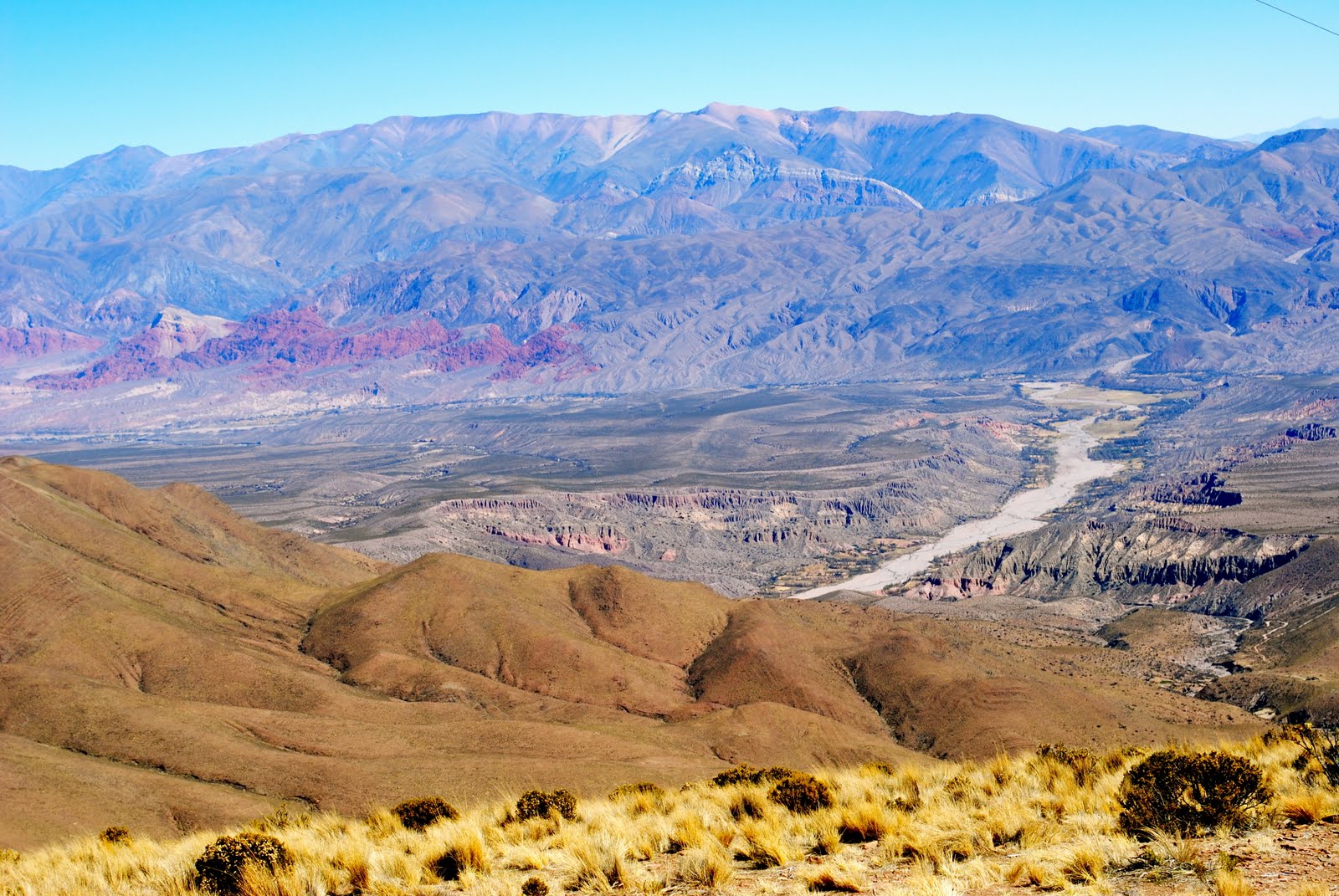
Later, we drove past two people hiking up the road. I couldn’t believe they had gotten there without a car: we had been driving at least an hour from the town. They wore balaclavas and aviator sunglasses to fight off the wind and the dust. Luis asked where they were going and if they wanted a ride. They said yes and got into the bed of the pickup. We turned off onto a smaller road and drove further. When we rounded the corner there was an amazing view of mountains with different colored layers. The different colors come from the oxidation of the different metals in the mountains-- each color is from a different metal; I asked Luis why they were colored that way and he said they were simply a gift from the gods. The pictures do not do the mountains justice, and they are good pictures. Augustina said it wouldn’t be easy for us to forget them now, and that tourists did not know about this spot.

Later we drove to Augustina’s village to meet her parents. She does not live there now but visits when she can. We had to cross a bunch of large creeks to get there. In the summer the creeks are rivers and you can only access the village by foot. They said when somebody is sick it can sometimes take the ambulance days to get there. There are about one hundred houses in the village and for each house there is one family. Generally there are eight to ten children per couple, as well as the grandparents. The houses are not big. In fact, they are extremely tiny. They are made of mud and clay and their colors vary depending on the color of the dirt where the house is built. Inside they are filled with hay for warmth and they smell like earth and manure, but not filth. Her grandma had no teeth and spoke with her gums-- I did not understand a single word she said. She is ninety four and wore handmade leather sandals with thick woolen socks and a heavy red cloak. She also had a funny looking hat. I wanted to take a picture but I didn’t know if it would be offensive. People stared at us everywhere we went in the village. However, we were told that these days gringos are more common: the village was wired for electricity five years ago and the men that come to fix the lines after storms have white skin as well.

After, we went to another mountain vista. It was as incredible as the first one and even more remote. Luis pointed to the passes that his grandfather used to walk with his animals to get to the nearest town. It was nearly a week-long voyage. Augustina picked moss to brew in a tea that lowers cholesterol and showed us where to find white potatoes that taste sweet when you eat them raw. We found a mountain lake that was frozen over and Luis and I walked out onto it. We jumped to test the thickness of the ice and it made a cracking noise— after, I realized that I am not particularly intelligent.

The drive back to town was two hours and it was dark when we arrived. We passed several men bringing in their flocks for the night and while they crossed the road their sheep dogs barked at us like crossing guards. We saw the the handful of lights from Humahuaca from a long way off. For such a small town it seemed impossibly bright.


Sunday, July 31, 2011

Tomorrow

I go North.

I have a friend from class who is a little eccentric.

He is also entirely without shame. He speaks worse than I do, and every place we go he talks in severely broken Castellano about why he thinks there is more crime in Argentina than in the States, or why he thinks Argentines are prejudiced against Americans. I want to tell him it’s because he speaking far more loudly than foreigners should ever speak and that the guy behind us has been following us since the last corner. Instead, I just generally pretend not to know him. But somehow, nothing bad ever seems to happen to him-- he makes friends with people just about everywhere we go—- turning around and striking up a conversation with the guy I thought was going to rob us. Since I realized this, I’ve been trying to be a bit more like him and not be so embarrassed by the fact that I am a foreigner. It’s pretty obvious whether I want it to be or not, so I might as well embrace it.

The strangers I’ve been meeting lately have to ask where I’m from now. When I say the U.S. they are usually surprised. You speak very, very well for an American they tell me. For whatever reason, a lot of them think I'm German at first.

Standing out has its perks too. The other night three different girls at the same bar told me I had beautiful eyes. That makes three times in my life I’ve been told I have beautiful eyes. They were all surprised I spoke Spanish. I go to the same restaurant with a friend of mine for lunch a couple times a week. The owner, Carlos, runs it with his two sons. He kisses me on the cheek when I walk in the door and if it’s not too busy he sits down with me to chat for a little while. When he brings our coffee, he also pours three cognacs and makes a toast that I can never understand before we drink. He must be close to eighty.

So far though, I’ve only been telling you the charming things.

I haven’t mentioned the homeless boy with bloodshot eyes who came up to my table the other night. He didn’t even ask for money- he just stared at us. A girl I was with asked him if he was in school. He wasn’t. She asked what he wanted to be when he grew up, he said a killer. I asked why and he just said because.

I haven’t mentioned the broken down police car two cops asked me to help them push, or how afterwards the people on the corner asked why I had helped them. They’re the police I said. No, they said, they're the real killers.

I haven’t mentioned the reggae club my cousin took me to where, for the first time in Argentina, I felt absolutely and truly unsafe. I haven’t mentioned the way people looked at me there, with eyes that reminded me my skin was whiter than theirs and that I didn’t belong. I haven’t talked about how suffocating it felt, or how confused my cousin was when I said I needed to go.

But that’s the thing about Argentina: it is not first world. That's it. There are parts that seem to be, but outside of them, past the barb wire fences and the guard dogs there is always everything else. Today, I rode my aunt’s equitation horse through the street with their burnt out cars and piles of garbage. Stray dogs bit at its heels and all I could do was hold on as the horse spooked and ran, like it too knew that their world and ours weren't made to collide.


Saturday, July 30, 2011

It is late afternoon.

I am writing this in a ‘literary café’ in the old part of the city. I do not know what here is exactly literary but the waiter refills my glass with good red wine for free. Outside, past the sausages hanging in the window, the streets are made of cobblestone. The lighting is dim and everything feels decidedly Argentine.

I have been living mostly at my aunt’s house downtown. It is beautiful and old, and dangerously close to what I would call a mansion. Nobody lives there right now and it is in the process of being moved out of: the only furniture inside is the massive oak table in the dining room and a couple of beds covered with coarse wool blankets upstairs. Most of my aunt’s paintings are still hanging, as are, unfortunately, her many antique and phenomenally creepy mirrors. Currently the house is unheated, and I spend a lot of time sliding around the dark hardwood floors in my socks to stay warm and entertained. When I wake up in the morning, I can see my breath condense on the air; it reminds me of camping in the wintertime.

Last night, a friend and I were walking back from the supermarket when it started to pour. With ten blocks to go and tired from the day, we decided not to make a run for it. All around us people were sprinting by and hailing taxis and dramatically splashing through puddles-- it seemed like we were going in slow motion. When we got to the house, my hands were cold and it took me forever to unlock the front door's three ancient deadbolts. I’m not sure if this is possible, but I think it was colder inside the house than out. We put on dry clothes and made some pasta we had found in one of the empty cupboards, listening to Spanish music while we cooked. We found a dusty bottle of wine and opened it, but the seal was bad and it tasted like vinegar. There were no knobs on the stove, but we managed to tinker with it and some matches until we got it lit. Later, my friend burnt his hand and I found it funnier than he did.

The rain made a lot of noise on the roof and it felt good to speak English for a little while.


Friday, July 22, 2011

I feel like I have a lot to write but nothing to say.

Maybe it's the other way around. In a lot of ways, I've settled into life here- so much so that it's tough to believe I've only been here for two weeks. Yesterday I explained to an old man which subways lines he needed to take to get where he was going; I've come a long way from riding the wrong train in the wrong direction.

Still, the more I am able to get by in Buenos Aires the further I realize I am away from actually being an Argentine. The city is big and fast and cold. It is hard to connect with people. My best friends are from my language class and are all over thirty years old. The ten year difference between us feels much smaller than the gap between us as foreigners and everybody else.

I have green eyes and brown hair. Here they say I am blond with blue eyes. When I walk through busy streets Columbians with dreadlocks hassle me in broken English and ask if I want to buy drugs.

I've been trying to open up and simply embrace the fact that I am a foreigner but it is hard and I am often embarrassed. Last week, when I was walking down the street I called a friend from home and spoke (quietly) in English. A man walked past me a couple steps before screaming "go the fuck back to America." Nice, huh? A day later, I had ice cream with my cousin and a couple of her friends. The obese one, while eating a 1/4 kilo sized serving of dulce de leche, told me that he could never live in America because he would get fat. I wanted to hit him.

Thankfully however, there are two sides to everything. Yesterday I was walking through a market on Calle Peru where people sell everything from jewelry to pirated movies to junk they literally picked out of the garbage. I saw a couple of vendors playing chess surrounded by a group of seven or eight more of them watching. I stood by a tree and watched them play for a while. I'm pretty good at chess but they were better. They also played very, very quickly. Towards the end of the game, one of the men from the group watching the game asked if I wanted to play. He had long hair, huge sunglasses, and bad teeth. I told him thanks, but I was okay.

He insisted, saying it was only fifteen pesos to play. Really, I told him, I'm okay. The game that was going on ended and the winner, a man in his mid to late thirties with a pierced eyebrow, told me that his friend was just kidding and that if I actually wanted to play it was free. After a long time, I said yes.

I sat down on one of the egg crates they used for stools and looked at the board: sixty-four black and white squares painted on a piece of cardboard cut to be almost square. The men watching were laughing and saying things to my opponent I couldn't understand. When I put my foot through the straps of my backpack under the table so it didn't dissapear, I tried to do so without them noticing. I was very nervous and set up my pieces wrong: putting the King and Queen on the wrong squares. The men laughed again.

I introduced myself to my opponent and he said his name was Marion. The piercing looked like it must have hurt. He was blowing into his hands and drinking something from a styrofoam cup. I told him I was going to lose and when I made my first move I couldn't tell if my hand was shaking from nerves or the cold.

I played very, very well, and eventually won. He asked for a rematch. The group of men weren't laughing anymore- they were interested, and more had come over to watch. I asked what the name of the pieces were in Castellano and they taught me. I checked that my backpack was still there. It was. Then I won again. After that they put me against the man with long hair and sunglasses. I couldn't understand his name when he mumbled it through his rotted teeth. He was much better than me, but I did my best to put up a fight. After, they told me they play there every day and I can come back any time.

I think I will.